|
Tuesday, August 13, 2002 |
As Blake Well Knew From The New York Times: Edsger Wybe Dijkstra, whose contributions to the mathematical logic that underlies computer programs and operating systems make him one of the intellectual giants of the field, died on [August 6, 2002] at his home in Nuenen, the Netherlands. He was 72.... Dr. Dijkstra is best known for his shortest-path algorithm, a method for finding the most direct route on a graph or map.... The shortest-path algorithm, which is now widely used in global positioning systems and travel planning, came to him one morning in 1956 as he sat sipping coffee on the terrace of an Amsterdam cafe. It took him three years to publish the method, which is now known simply as Dijkstra's algorithm. At the time, he said, algorithms were hardly considered a scientific topic. From my August 6, 2002, note below: ...right through hell there is a path, as Blake well knew... -- Malcolm Lowry, 1947, Under the Volcano |
|
Thursday, August 08, 2002 |
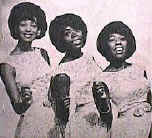
Here's Your Sign Last night, reading the 1990 Nobel Prize Lecture by Octavio Paz, I was struck by the fact that he was describing, in his own life and in the life of his culture, what might best be called a "fall from grace." I thought of putting this phrase in a journal entry, but decided that it sounded too hokey, in a faux-pious sort of way -- as, indeed, does most Christian discourse. I was brought up short when I read the morning paper, which, in a review of the new Mel Gibson movie "Signs," described Gibson's character's "fall from grace" in those exact words. The Paz lecture dealt with his childhood, which seemed to him to take place in a realm without time: "All time, past or future, real or imaginary, was pure presence. Space transformed itself ceaselessly. The beyond was here, all was here: a valley, a mountain, a distant country, the neighbours' patio." Paz also mentions the Christian concept of eternity as a realm outside time, and discusses what happened to modern thought after it abandoned the concept of eternity. Naturally, many writers have dealt with the subject of time, but it seems particularly part of the Zeitgeist now, with a new Spielberg film about precognition. My own small experience, from last night until today, may or may not have been precognitive. I suspect it's the sort of thing that many people often experience, a sort of "So that's what that was about" feeling. Traditionally, such experience has been expressed in terms of a theological framework. For me, the appropriate framework is philological rather than theological. Paz begins his lecture with remarks on giving thanks... gracias, in Spanish. This is, of course, another word for graces, and is what prompted me to think of the phrase "fall from grace" when reading Paz. For a less academic approach to the graces, see the film "Some Girls," also released under the title "Sisters." This is the most profoundly Catholic film I have ever seen. A still from "Some Girls":
|
|
Tuesday, August 06, 2002 |
In honor of Pope Callistus III, and all of whom died on this date: A lavender love butterfly vignette... If you remember something there That glided past you, Followed close by heavy breathing, Don't be concerned. It will not harm you; It's only me, pursuing something I'm not sure of. and a But seriously... A few words in memory of a great mathematician, André Weil, who died on August 6, 1998: "I wonder if it is because to-night my soul has really died that I feel at the moment something like peace. Or is it because right through hell there is a path, as Blake well knew, and though I may not take it, sometimes lately in dreams I have been able to see it?" -- Malcolm Lowry, 1947, Under the Volcano There is a link on the Grand Finale site above to a site on British Columbia, which to Lowry symbolized heaven on earth. See also my website Shining Forth, the title of which is not unrelated to the August 6, 1993 encyclical of Pope John Paul II. |
|
Tuesday, August 06, 2002 |
August 6: Feast of the Metamorphosis Adapted from Brief Exhortations: Geneva Bible: Romans 12:2 2 And be not conformed to this world: but be ye transformed [ metamorfousqe ] by the renewing of your f mind, that ye may prove what [is] that good, and acceptable, and perfect, will of God. ROMANS 12:2 The word "transformed" is from the Greek word "metamorphe," (to transform or change) and is found only in the above verse, in Matthew 17:2 ... Geneva Bible: Matthew 17:2 And was b transfigured [ metemorfwqh ] before them: and his face did shine as the sun, and his raiment was white as the light. MATTHEW 17:2 and in Mark 9:2 ... Geneva Bible: Mark 9:2 1 And after six days Jesus taketh [with him] Peter, and James, and John, and leadeth them up into an high mountain apart by themselves: and he was transfigured [ metemorfwqh ] before them. MARK 9:2 where it is used of the transfiguration of Jesus. It is used in biology with reference to the change of the worm to the butterfly. Note by S. H. Cullinane, August 6, 2002: For more on the Geneva (Shakespeare's) Bible, see Michael Brown's Introduction. |
|
Tuesday, August 06, 2002 |
Veritatis Splendor Black Holes Conclusion of the Nobel Prize lecture of Subrahmanyan Chandrasekhar on December 8, 1983: The mathematical theory of black holes is a subject of immense complexity; but its study has convinced me of the basic truth of the ancient mottoes, The simple is the seal of the true and Beauty is the splendour of truth. White Holes Statement by Karol Wojtyla on August 6, 1993: The splendour of truth shines forth in all the works of the Creator and, in a special way, in man, created in the image and likeness of God (cf. Gen 1:26). Wojtyla, who apparently prefers folk-tales to truth, may appreciate the website White Hole Theory at the World University Library. Is the Pope Catholic? The World University Library furnishes an answer to the question that has long troubled many: Is the Pope Catholic? According to Catholic.com, The Greek roots of the term "Catholic" mean "according to (kata-) the whole (holos)," or more colloquially, "universal." Upon comparing the contents of the World University Library with the contents of Wojtyla's 1993 statement, it becomes apparent that the World University Library is catholic (i.e., universal), but the Pope is not. |
|
Monday, August 05, 2002 |
What is Truth? In honor of the 200th anniversary of the birth of Niels Henrik Abel, a partial answer: Elliptic Curves and Modular Forms and the introductory work, Function Theory, Geometry, Arithmetic, by Henry McKean and Victor Moll |
|
Monday, August 05, 2002 |
After the Fall "We're in a war of words." -- Andy Rooney, undated column I've heard of affairs that are strictly plutonic, You may have noticed at Strike Force Centre or at StrikeForce.dk that "After the Fall" will be released as a Team Deathmatch map for Strike Force. Today's birthday: Fiddler Mark O'Connor. Q - What was that "haunting" melody and where does it come from? A - The piece used as the theme music for The Civil War is called "Ashokan Farewell." Q - How do you get to Ashokan? A - Take a left at Beaverkill Road. Recommended listening: "The Devil Comes Back to Georgia," "House of the Rising Sun," and "Ashokan Farewell," on 10:59 pm |
|
Monday, August 05, 2002 |
War Room "What would bug the Taliban more than seeing a gay woman in a suit surrounded by Jews?" -- Ellen DeGeneres at the 2001 Emmy awards How about seeing Judy Davis in a sequel to The Hot Rock.... Afghanistan Banana Stand |
|
Monday, August 05, 2002 |
A Star is Born Julius Peter Christian Petersen died on this date in Copenhagen in 1910. To an outsider attending a graph theory conference, it must appear that we graph theorists have an unnatural reverence for a little symmetrical picture of 10 dots and 15 lines (see figure). No matter what the title of the talk, odds are that sooner or later the speaker will draw it, and heads in the audience will nod in apparent obeisance.
The truth is quite different. In reality, few of us go in search of the Petersen graph. It is more that it stalks us, hiding behind many an innocent lemma, waiting to spring out at us. Sometimes it is in a good mood, and it marches proudly at the head of a new sequence of graphs with some fascinating property. Just as often, alas, it sits across our budding proof as a sullen and stubborn obstacle.
-- Brendan McKay, review of a book on the Petersen graph |
|
Monday, August 05, 2002 |
History, said Stephen.... -- To really know a subject you've got to learn a bit of its history.... We both know what memories can bring; All sorts of structures that can be defined for finite sets have analogues for the projective geometry of finite fields.... Clearly this pattern is trying to tell us something; the question is what. As always, it pays to focus on the simplest case, since that's where everything starts. In the beginning was the word.... -- The Gospel according to Saint John The anonymous author of John makes liberal use of allegory and double-entendre to illustrate this theme. Born yesterday: Logician John Venn. Venn considered three discs R, S, and T as typical subsets of a set U. The intersections of these discs and their complements divide U into 8 nonoverlapping regions.... -- History of Mathematics at St. Andrews Who would not be rapt by the thought of such marvels?.... -- Saint Bonaventure on the Trinity |
|
Sunday, August 04, 2002 |
versus One year ago today, Lorenzo Music, the voice of Carlton the doorman on Rhoda, died. His eulogy from Valerie Harper: "Valerie's heart is breaking, but Rhoda is certain that Carlton the doorman is giving St. Peter at the gate a run for his money." Today's birthday: Logician John Venn. Appearing for the story theory... Flannery O'Connor: "In the long run, a people is known, not by its statements or statistics, but by the stories it tells. Fiction is the most impure and the most modest and the most human of the arts." Appearing for the diamond theory... Mary McCarthy and G. H. Hardy: From the Hollywood Investigator: On October 18, 1979, Mary McCarthy said on PBS's Dick Cavett Show: "Every word she writes is a lie, including 'and' and 'the.'" Don't forget "a," as in "a people is known" -- "Greek mathematics is permanent, more permanent even than Greek literature. Archimedes will be remembered when Aeschylus is forgotten, because languages die and mathematical ideas do not." -- G. H. Hardy in A Mathematician's Apology And a closing rebuttal from the story theory... Martin Heidegger and Dean Martin: Words of wisdom from Martin Heidegger, Catholic Nazi: "The nature of art is poetry. The nature of poetry, in turn, is the founding of truth.... In the work, truth is thrown toward... an historical group of men." -- Poetry, Language, Thought, page 75, translated by Albert Hofstadter, Harper & Row paperback, 1975 And from Dean Martin, avatar of anti-art : - Artist: Dean Martin as sung on "Dean Martin's Greatest Hits" |
|
Saturday, August 03, 2002 |
Miss Sauvé for the Sunday following Corpus Christi Day, 2002: The part of her fiction that most fascinates me, then and now, is what many critics referred to as “the grotesque,” but what she herself called “the reasonable use of the unreasonable.” [Flannery O’Connor, Mystery and Manners: Occasional Prose, Robert and Sally Fitzgerald, eds. (New York: Farrar, Straus, 1969)] A modest example comes to mind. In a short story .... the setting sun appears like a great red ball, but she sees it as “an elevated Host drenched in blood” leaving a “line like a red clay road in the sky.” [Flannery O’Connor, “A Temple of the Holy Ghost” from A Good Man is Hard to Find (New York: Harcourt, Brace & World, 1971)] In a letter to a friend of hers, O’Connor would later write, “…like the child, I believe the Host is actually the body and blood of Christ, not just a symbol. If the story grows for you it is because of the mystery of the Eucharist in it.” In that same correspondence, O’Connor relates this awkward experience:
I was once, five or six years ago, taken by [Robert Lowell and Elizabeth Hardwick] to have dinner with Mary McCarthy…. She departed the Church at the age of 15 and is a Big Intellectual. We went and eight and at one, I hadn’t opened my mouth once, there being nothing for me in such company to say…. Having me there was like having a dog present who had been trained to say a few words but overcome with inadequacy had forgotten them. Well, toward morning the conversation turned on the Eucharist, which I, being the Catholic, was obviously supposed to defend. [McCarthy] said that when she was a child and received the Host, she thought of it as the Holy Ghost, He being the “most portable” person of the Trinity; now she thought of it as a symbol and implied that it was a pretty good one. I then said, in a very shaky voice, “Well, if it’s a symbol, to hell with it.” That was all the defense I was capable of but I realize now that this is all I will ever be able to say about it, outside of a story, except that it is the center of existence for me; all the rest of life is expendable. [Sally Fitzgerald, ed., The Habit of Being: The Letters of Flannery O’Connor (Vintage: New York, 1979) 124-125] ....There is, of course, something entirely preposterous and, well, unreasonable, almost grotesque, about the Catholic doctrine of the Real Presence. We claim, with a perfectly straight face, to eat the body and drink the blood of the Eternal Word of God, the second person of the Most Holy Trinity who, according to some, shouldn’t even have a body to begin with. But therein lies precisely the most outlandish feature of the Eucharist: namely, that it embodies the essential scandal of the Incarnation itself. -- Friar Francisco Nahoe, OFM Conv. From James Joyce A Portrait Of The Artist As A Young Man Why was the sacrament of the eucharist instituted under the two species of bread and wine if Jesus Christ be present body and blood, soul and divinity, in the bread alone and in the wine alone? Does a tiny particle of the consecrated bread contain all the body and blood of Jesus Christ or a part only of the body and blood? If the wine change into vinegar and the host crumble into corruption after they have been consecrated, is Jesus Christ still present under their species as God and as man? From The Gazette, Montreal, of Sunday, August 20, 1995, page C4: "Summer of '69," a memoir by Judy Lapalme on the death by accidental drowning of her 15-year-old younger brother: "I had never tasted pizza until Jeff died. Our family, of staunch Irish Catholic stock with more offspring than money, couldn't cope with the luxury or the spice. The Hallidays, neighbors from across the street, sent it over to us the day after the funeral, from Miss Sauvé's Pizzeria, on Sauvé St., just east of Lajeunesse St. in Ahuntsic. An all-dressed pizza with the hard hat in the centre.... I was 17 that summer and had just completed Grade 12 at Holy Names High School in Rosemont.... .... Jeff was almost 16, a handsome football star, a rebellious, headstrong, sturdy young man who was forever locking horns with my father.... On Friday, Aug. 1, Jeff went out on the boat... and never came back.... The day after the funeral, a white Volkswagen from Miss Sauvé's Pizzeria delivered a jumbo, all-dressed pizza to us. The Hallidays' daughter, Diane, had been smitten with Jeff and wanted to do something special. My father assured us that we wouldn't like it, too spicy and probably too garlicky. There could not be a worse indictment of a person to my father than to declare them reeking of garlic. The rest of us tore into the cardboard and began tasting this exotic offering -- melted strands of creamy, rubbery, burn-your-palate mozzarrella that wasn't Velveeta, crisp, dry, and earthy mushrooms, spicy and salty pepperoni sliding off the crust with each bite, green peppers.... Bread crust both crisp and soggy with tomato sauce laden with garlic and oregano. It was an all-dressed pizza, tasted for the first time, the day after we buried Jeff.... The fall of 1969, I went to McGill.... I never had another pizza from Miss Sauvé's. It's gone now -- like so many things." Ten thousand places
-- Gerard Manley Hopkins, 1844-1889 American Literature Web Resources:Flannery O'ConnorShe died on August 3, 1964 at the age of 39. In almost all of her works the characters were led to a place where they had to deal with God’s presence in the world. She once said "in the long run, a people is known, not by its statements or statistics, but by the stories it tells. Fiction is the most impure and the most modest and the most human of the arts." Flannery OConnor - Southern Prophet: ... When a woman wrote to Flannery O'Connor saying that one of her stories "left a bad taste in my mouth," Flannery wrote back: "You weren't supposed to eat it." 10:42 pm |
|
Saturday, August 03, 2002 |
The Cruciatus Curse Today's birthday -- Martin Sheen |
|
Friday, August 02, 2002 |
Death of a Cut-up The dark philosopher William S. Burroughs died five years ago today. Part of his legacy is the "cut-up" technique. See William S. Burroughs and Cut-up, where it is noted that "the Cut-up technique was inspired by the collage technique used by artists and photographers," and Cut-ups and the Internet, where it is noted that "The cut-up (or 'cutup') is a method of juxtaposition where a work (usually text) is cut into pieces and the pieces rearranged in a random order, similar to the montage or collage technique in painting." The idea of hypertext (the "ht" in "http://," for "HyperText Transfer Protocol://") is not unrelated to the concept of the "cut-up"... See Time Line and Contents at The Electronic Labyrinth. Also from "The Electronic Labyrinth": The question of beginnings and endings--how many of them to have and where to put them--has troubled many authors. Indeed, some have seen the singular linear path of traditional literature as cause for consternation. This is expressed by the narrator in Flann O'Brien's At Swim-Two-Birds (1968): See also the writings of Eric Olson on the collage method of psychotherapy, the subject of "Aesthetics of Madness," my July 30, 2002, web journal entry below. |
|
Friday, August 02, 2002 |
Double Day... August 2, 2002 "Time cannot exist without a soul (to count it)." -- Aristotle The above quotation appears in my journal note of August 2, 1995, as an epigraph on the reproduced title page of The Sense of an Ending, by Frank Kermode (Oxford University Press, 1967). August 2, 1995, was the fortieth anniversary of Wallace Stevens's death. On the same date in 1932 -- seventy years ago today -- actor Peter O'Toole was born. O'Toole's name appears, in a suitably regal fashion, in my journal note of August 2, 1995, next to the heraldic crest of Oxford University, which states that "Dominus illuminatio mea." Both the crest and the name appear below the reproduced title page of Kermode's book -- forming, as it were, a foundation for what Harvard professor Marjorie Garber scornfully called "the Church of St. Frank" (letters to the editor, New York Times Book Review, July 30, 1995). Meditations for today, August 2, 2002: From page 60 of Why I Am a Catholic, by Gary Wills (Houghton Mifflin, 2002): "Was Jesus teasing Peter when he called him 'Rocky,' naming him ab opposito, as when one calls a not-so-bright person Einstein?" From page 87 of The Third Word War, by Ian Lee (A&W Publishers, Inc., New York, 1978): "Two birds... One stone (EIN STEIN)." From "Seventy Years Later," Section I of "The Rock," a poem by Wallace Stevens: A theorem proposed between the two -- Two figures in a nature of the sun.... From page 117 of The Sense of an Ending: "A great many different kinds of writing are called avant-garde.... The work of William Burroughs, for instance, is avant-garde. His is the literature of withdrawal, and his interpreters speak of his hatred for life, his junk nihilism, his treatment of the body as a corpse full of cravings. The language of his books is the language of an ending world, its aim... 'self-abolition.'" From "Today in History," by The Associated Press: "Five years ago: 'Naked Lunch' author William S. Burroughs, the godfather of the 'Beat generation,' died in Kansas City, Mo., at age 83." Part of the above statement is the usual sort of AP disinformation, due not to any sinister intent but to stupidity and carelessness. Burroughs actually died in Lawrence, Kansas. For the location of Lawrence, click on the link below. Location matters. From page 118 of The Sense of an Ending: "Somewhere, then, the avant-garde language must always rejoin the vernacular." From the Billie Holiday songbook: "Good mornin', heartache." From page 63 of The New Yorker issue dated August 5, 2002: "Birthday, death-day -- what day is not both?" -- John Updike |
|
Thursday, August 01, 2002 |
Stephen King's Seattle Rose From http://www.janeellen.com/musings/quakerose.html: On February 28, 2001 (Ash Wednesday).... At a shop called Mind Over Matter in Port Townsend, Washington, people had been playing with a sand pendulum throughout the morning. At 10.55 am local time a 6.8 magnitude earthquake, the strongest in over 50 years, rocked Seattle and the surrounding area.... In the midst of chaos, something strange and wonderful happened. The seismic activity caused the sand pendulum to create rippling waves in the sand, which as the shaking ceased, resembled a solitary flower in the midst of devastation: a rose. From http://archives.skemers.com/2200/nl2130.txt:
Subj: Re: SKEMERs Letter #2124 (Rose Red, HIA DVD, Insomnia Editions)
The one they played most (even at the end) was Theme From a Summer Place. It's from a movie called (tada) A Summer Place, released in the late 50s. I've never seen it, but the song is familiar. ~Chris
See also http://autumn.www1.50megs.com/sunset.html: This site offers a sunset reflected in gently rippling water, with "Theme from a Summer Place" playing in the background. Complete lyrics to "Summer Place" and "A Lover's Concerto" (discussed below) are collected along with other "Songs of Innocence" at http://www.geocities.com/lyricalmusings/60s.htm. The reader may supply his own Songs of Experience... My own personal favorite is the fictional rendition, in the recent novel The Last Samurai, of "I Can't Get No Satisfaction" in the style of Percy Faith. This note was suggested by a search for quotations from the composer Igor Stravinsky that ended at Jane Ellen's collection of quotes on music and the arts at http://www.janeellen.com/quotations.html. Roll over, Stravinsky. 1:31 pm |
|
Wednesday, July 31, 2002 |
Bach's Minuet in G Left to right: June Montiero, Barbara Parritt, and Barbara Harris From the website http://www.history-of-rock.com/toys.htm -- In 1964 they were signed by the Publishing firm Genius, Inc., which teamed them with the songwriting duo Sandy Linzer and Denny Randell.... The writers took a classical finger exercise from Bach and put a Motown bassline to it and "A Lover's Concerto" was born. September 1965: "A Lover's Concerto" on the Dynavoice label went #4 R&B, crossed over to pop charts #2, and also became a #5 hit in England. In 1965 the song sold over a million copies. The Toys began appearing on television shows such as "Shindig!," "Hullabullo," and "American Bandstand," toured with Gene Pitney, and appeared in the film It's a Bikini World. Other sites giving further details on Bach's Minuet in G: Search for the sheet music and a rendition of the work at codamusic.com's Finale Showcase Search Page. Seeing and hearing the music on this site requires that you download Coda's SmartMusic Viewer, and possibly requires that you adjust your browser settings, depending on the operating system you use. For another look at Bach's music, along with a midi rendition, you can download Music MasterWorks composing software from the Aspire Software site... http://www.musicmasterworks.com/. Then download the midi file of the Minuet in G itself, "Minuet in G, BWV841" (M.Lombardi), from the website http://www.classicalarchives.com/bach.html. (To do this, right-click on the minuet link and use the "Save Target As" option, if you, like me, are using Internet Explorer with Windows.) After you have downloaded the midi file of the minuet, use the "File" and "Open" options in Music MasterWorks to display and play the music. A comparison of these two versions of Bach is instructive for anyone planning to purchase music composition software. The MasterWorks creates sheet music from its midi file that is quite sophisticated and rather hard to follow, but this music accurately reflects the superior musical performance in the downloaded midi file versus the rendition in the online Finale Showcase file. The Showcase file is much simpler and easier to read, as the rendition it describes is also quite simple. The Gentle Rain For an even simpler version, those of us who were in our salad days in 1965 can consult our memories of The Toys: How gentle is the rain Those of the younger generation with neither the patience nor the taste to seek out the original by Bach may be content with the following site -- To a more mature audience, the picture of a Venetian sunset at the above site (similar to the photo below, from Shunya's Italy) will, together with the lyrics of The Toys, suggest that The quality of mercy is not strained. This line, addressed to Shylock in "The Merchant of Venice," contradicts, to some extent, the statement by Igor Stravinsky in The Poetics of Music (1942, English version 1947) that music does not express anything at all. Stravinsky is buried in Venice. From Famous Graves: Venice |
|
Tuesday, July 30, 2002 |
Aesthetics of Madness Admirers of the film "A Beautiful Mind" may be interested in the thoughts of psychotherapist Eric Olson on what he calls the "collage method" of therapy. The fictional protagonist of "A Beautiful Mind," very loosely based on the real-life mathematician John Nash, displays his madness in a visually striking manner (as required by cinematic art). He makes enormous collages of published matter in which he believes he has found hidden patterns. This fictional character is in some ways more like the real-life therapist Olson than like the real-life schizophrenic Nash. For an excellent introduction to Olson's world, see the New York Times Magazine article of April 1, 2001, on Olson and on the mysterious death of Olson's father Frank, who worked for the CIA. Here the plot thickens... the title of the article is "What Did the C.I.A. Do to Eric Olson's Father?" For Olson's own website, see The Frank Olson Legacy Project, which has links to Olson's work on collage therapy. Viewed in the context of this website, the resemblance of Olson's collages to the collages of "A Beautiful Mind" is, to borrow Freud's expression, uncanny. Olson's own introduction to his collage method is found on the web page "Theory and therapy." All of the above resulted from a Google search to see if Arlene Croce's 1993 New Yorker article on Balanchine and Stravinsky, "The Spelling of Agon," could be found online. I did not find Arlene, but I did find the following, from a collage of quotations assembled by Eric Olson -- "There might be a game in which paper figures were put together to form a story, or at any rate were somehow assembled. The materials might be collected and stored in a scrap-book, full of pictures and anecdotes. The child might then take various bits from the scrap-book to put into the construction; and he might take a considerable picture because it had something in it which he wanted and he might just include the rest because it was there.”
The aesthetics of collage is, of course, not without its relevance to the creation (or assembly) of weblogs. 12:12 am |
|
Monday, July 29, 2002 |
At Random Today's birthday: poet Stanley Kunitz -- "I'm Stanley Kunitz. I live in New York City. I published my first book of poems some 70 years ago. Back in 1926, I was roaming through the stacks of the Widener Library at Harvard. While I was walking through the section on English poetry of the 19th century, I just at random lifted my arm and picked a book off the shelf. It was... an author I was not familiar with, Gerard Manley Hopkins. The page that I turned to and began to read was a page devoted to a poem called "God's Grandeur." I couldn't believe what I was reading when I opened this book and started reading that poem. It really shook me, because it was unlike anything else I had ever read before. When I started reading it, suddenly that whole book became alive to me. It was filled with such a lyric passion. It was so fierce and eloquent, wounded and yet radiant, that I knew that it was speaking directly to me and giving me a hint of the kind of poetry that I would be dedicated to for the rest of my life." |
|
Sunday, July 28, 2002 |
Keats and the Web From a letter of John Keats on the Web: "There is the passage in a famous letter of John Keats, 19th February, 1818: Now it appears to me that almost any Man may like the spider spin from his own inwards his own airy Citadel -- the points of leaves and twigs on which the spider begins her work are few, and she fills the air with a beautiful circuiting. Man should be content with as few points to tip with the fine Web of his Soul, and weave a tapestry empyrean full of symbols for his spiritual eye, of softness for his spiritual touch, of space for his wandering, of distinctness for his luxury." This seems not unrelated to the observations below on commonplace books and Web logs. |
|
Sunday, July 28, 2002 |
Memories, Dreams, Reflections Saul Steinberg in The New York Review of Books issue dated August 15, 2002, page 32: "The idea of reflections came to me in reading an observation by Pascal, cited in a book by W. H. Auden, who wrote an unusual kind of autobiography by collecting all the quotations he had annotated in the course of his life, which is a good way of displaying oneself, as a reflection of these quotations. Among them this observation by Pascal, which could have been made only by a mathematician...." Pascal's observation is that humans, animals, and plants have bilateral symmetry, but in nature at large there is only symmetry about a horizontal axis... reflections in water, nature's mirror. This seems related to the puzzling question of why a mirror reverses left and right, but not up and down. The Steinberg quote is from the book Reflections and Shadows, reviewed here. Bibliographic data on Auden's commonplace book: A couple of websites on commonplace books: A classic: The Practical Cogitator - The Thinker's Anthology, |
|
Sunday, July 28, 2002 |
A Commonplace Blog William Safire blogs the word "blog" in his On Language column today. He specifically mentions xanga.com -- "Blog is a shortening of Web log. It is a Web site belonging to some average but opinionated Joe or Josie who keeps what used to be called a ''commonplace book'' -- a collection of clippings, musings and other things like journal entries that strike one's fancy or titillate one's curiosity.... To set one up (which I have not done because I don't want anyone to know what I think), you log on to a free service like blogger.com or xanga.com, fill out a form and let it create a Web site for you. Then you follow the instructions...." |
|
Friday, July 26, 2002 |
Today's birthdays:
Another opening of another show.... Kevin, Kate, and Carl.
|
|
Thursday, July 25, 2002 |
I've been looking for a weblog editor, and Xanga seems like it's the best. Too bad they can't host pre-existing domain names.... I registered the URL log24.com some time ago, and want to use it. But I also want to use Xanga's neat entry software. My solution: Use Xanga for day-to-day entries, with the new URL log24.net (just purchased), and use my log24.com site as an archive. 9:18 pm |
|
Saturday, July 20, 2002 |
Initial trial entry. See Diamond Theory. The Diamond Theorem
| ||||||||||||||||||||||||||||||||||||||||||||||
| Example of the 4x4 case In the 4x4 case of the diamond theorem, we regard the four-diamond figure D at left, below, as a 4x4 array of two-color diagonally-divided square tiles. Let G be the group of 322,560 permutations of these 16 tiles generated by arbitrarily mixing random permutations of rows and of columns with random permutations of the four 2x2 quadrants. THEOREM: Every G-image of D (as at right, below) has some ordinary or color-interchange symmetry. | ||||||||||||||||||||||||||||||||||
| Let e denote transposition of the first two rows, f denote transposition of the last two columns, g denote transposition of the top left and bottom right quadrants, and h denote transposition of the middle two columns. Then Defgh is as at right. Note that Defgh has rotational color-interchange symmetry like that of the famed yin-yang symbol. |
| ||||||||||||||||||||||||||||||||
| Remarks on the 4x4 case: G is isomorphic to the affine group A on the linear 4-space over GF(2). The 35 structures of the 840 = 35 x 24 G-images of D are isomorphic to the 35 lines in the 3-dimensional projective space over GF(2). Orthogonality of structures corresponds to skewness of lines. We can define sums and products so that the G-images of D generate an ideal (1024 patterns characterized by all horizontal or vertical "cuts" being uninterrupted) of a ring of 4096 symmetric patterns. There is an infinite family of such "diamond" rings, isomorphic to rings of matrices over GF(4). For a movable JavaScript version of these 4x4 patterns, see The 16 Puzzle. | ||||||||||||||||||||||||||||||||||
|
Congratulations on your first post! The Xanga Community welcomes you. Good luck and happy weblogging! | |
|
Posted
7/20/2002 at 10:13 pm
by
TheXangaTeam |