Journal Archives of Steven H. Cullinane:
Entries to be Added to Log24.com Archive
Sunday, October 18, 2009
11:00 AM
ART WARS for St. Luke's Day:
Friday, October 16, 2009
11:30 AM
Noncontinuous Groups:
A page with this title has been added to my finite-geometry site.
(For the first version of that site, see a web page cached on August 15, 2000; compare with Ivars Peterson's August 28, 2000, column "Scrambled Grids." These pieces are clearly intended for two different audiences, but there is a certain similarity in the subject matter.)
Wednesday, October 14, 2009
9:29 AM
ART WARS:
Singer 7-Cycles


Click on images for details.
The 1985 Cullinane version
gives some algebraic background
for the 1987 Curtis version.
Tuesday, October 13, 2009
7:00 AM
Man and His Symbols:
Wakes
This morning's New York Times reports the deaths of Nuremberg interrogator Richard W. Sonnenfeldt and of avant-garde novelist and Beckett scholar Raymond Federman.
Symbols from this journal on the dates of their deaths:

A quotation that appeared here on
Wednesday, Oct. 7, seems relevant to
Federman:
But I am a worker, a tombstone mason, anxious to pleace averyburies and jully glad when Christmas comes his once ayear. You are a poorjoist, unctuous to polise nopebobbies....
-- James Joyce,
Finnegans Wake
Monday, October 12, 2009
7:00 AM
Annals of Aesthetics:
Sunday, October 11, 2009
7:00 PM
ART WARS:
Saturday, October 10, 2009
7:00 AM
ART WARS review:
Friday, October 9, 2009
9:00 AM
ART WARS
Identity: "...strict grids of nine pictures
establish an egalitarian
framework...."
--
Christopher KnightSome are moreegalitarianthan others.
Thursday, October 8, 2009
10:30 AM
Aesthetics continued...
Knight Moves
Deborah Solomon, New York Times Magazine, Sunday, June 27, 1999:
"While modern art began as an assault on the academy, post-modern art might be described as a return to the academy. Instead of the old academy of rules, now we have the Academy of Cool, schools that treat avant-garde rebellion as a learned occupation."
Christopher Knight, LA Times art critic, on Solomon:
"Back in the day, Solomon interviewed Knight for a
Times Magazine story on Los Angeles art schools. 'Having been a journalist (at that time) for almost two decades, I also did my homework,' Knight writes [in
a letter to the New York Press]. 'I prepared a couple of quotable quotes on the subject, which might encapsulate larger ideas.' One of Knight's pearls of wisdom, 'Modern art began as an assault on the academy, but post-modern art might be described as a return to the academy,' excited Solomon so much that, according to Knight, she printed it as her own observation in
her final piece, which bore no mention of the Knight interview. In the final story, a seriously bitter Knight writes, 'It was not a quote; my words had become her words.'" --
Gawker,
Oct. 11, 2007
A reference to Solomon's piece appeared in this journal in 2003.
See also yesterday's entry, today's 9 AM entry, and (for the Academy) an example of knight's move thinking.
Thursday, October 8, 2009
9:00 AM
Aesthetics continued...
In memory
of Irving Penn:
Graphic
Austerity
Christopher Knight
on
a current exhibitof Penn's work:
"In American Vogue,
strict grids of nine pictures
establish an egalitarian
framework; the design
anticipates Minimalist art
by a decade."
Wednesday, October 7, 2009
7:59 AM
A Passage:
Finucane's Wake
Terence McKenna,
"Surfing on Finnegans Wake"--
"Shall I try and find a passage?....
But I am a worker, a tombstone mason, anxious to pleace averyburies and jully glad when Christmas comes his once a year. You are a poorjoist, unctuous to polise nopebobbies...."
Tuesday, October 6, 2009
11:07 AM
Annals of Aesthetics, continued--
Monday, October 5, 2009
4:00 AM
Annals of Aesthetics:
-- Sondheim in translation
Saturday, October 3, 2009
3:31 AM
Annals of Aesthetics:
Friday, October 2, 2009
6:00 AM
Some Finite Geometry:
Edge on Heptads
Part I: Dye on Edge
"Summary:
....we obtain various orbits of partitions of quadrics over GF(2a) by their maximal totally singular subspaces; the corresponding stabilizers in the relevant orthogonal groups are investigated. It is explained how some of these partitions naturally generalize Conwell's heptagons for the Klein quadric in PG(5,2)."
"Introduction:
In 1910 Conwell... produced his heptagons in PG(5,2) associated with the Klein quadric K whose points represent the lines of PG(3,2).... Edge... constructed the 8 heptads of complexes in PG(3,2) directly. Both he and Conwell used their 8 objects to establish geometrically the isomorphisms SL(4,2)=A8 and O6(2)=S8 where O6(2) is the group of K...."
-- "Partitions and Their Stabilizers for Line Complexes and Quadrics," by R.H. Dye, Annali di Matematica Pura ed Applicata, Volume 114, Number 1, December 1977, pp. 173-194
Part II: Edge on Heptads
"The Geometry of the Linear Fractional Group LF(4,2)," by W.L. Edge, Proc. London Math Soc., Volume s3-4, No. 1, 1954, pp. 317-342. See the historical remarks on the first page.
Note added by Edge in proof:
"Since this paper was finished I have found one by G. M. Conwell: Annals of Mathematics (2) 11 (1910), 60-76...." |
Some context:
Wednesday, September 30, 2009
9:48 AM
Art and Religion:
Midnight in the Garden,
Autumn 2009
Wednesday, September 30, 2009
2:02 AM
Synchronistic Recognition:
Not So Second-Rate
From the above link in this journal on Thursday, Sept. 24, 2009:
"... the unthought-known dispatches a steady stream of 'notes' from underground. If it cannot gain a full return to consciousness, it at least would like some recognition-- even if disguised."
-- Randall Hoedeman, Sunnyhill Church, Pittsburgh

Randall Hoedeman
Another discovery reportedly also made last Thursday, Sept. 24:
"The Cullinan mine has again given the world a spectacularly beautiful and important diamond."
-- Petra Diamonds Ltd. CEO Johan Dippenaar
Picture from Fox News:

Tuesday, September 29, 2009
3:00 AM
Annals of Religion:
From Harper's Magazine
for the Feast of
St. Michael and All Angels:
Note on a poem by Rilke
Monday, September 28, 2009
3:00 AM
Annals of Aesthetics, continued:
Symmetry
for Germany
See Annals of Aesthetics,
January 13, 2009,
which features the following
example of modernism:
 ... and for readers of
the Sunday New York Times ...
The funereal heart illustrates
a review of a book titled
Her Fearful Symmetry. The book is set, partly, in London's Highgate Cemetery.
The book's author, Audrey Niffenegger,
has stated that her title refers to "the doubling and twinning and opposites" that are "essential to the theme and structure of the book." For examples of doubling, twinning, and opposites that I prefer to Niffenegger's, see this journal's
Saturday and
Sunday entries.
Fans of the
New York Times's cultural coverage may prefer
Niffenegger's own art work. They may also enjoy images from the weekend's
London Art Book Fair that suggested the rather different sort of book in
Saturday's entry.
Sunday, September 27, 2009
3:00 AM
Today's Sermon:
A Pleasantly
Discursive Treatment
In memory of Unitarian
minister
Forrest Church,
dead at 61 on Thursday:

--
"In sixteenth-century Transylvania, Unitarian congregations were established for the first time in history."
Gravity's Rainbow--"For every kind of vampire, there is a kind of cross."
Unitarian minister
Richard Trudeau--
"... I called the belief that
(1) Diamonds-- informative, certain truths about the world-- exist
the 'Diamond Theory' of truth. I said that for 2200 years the strongest evidence for the Diamond Theory was the widespread perception that
(2) The theorems of Euclidean geometry are diamonds....
As the news about non-Euclidean geometry spread-- first among mathematicians, then among scientists and philosophers-- the Diamond Theory began a long decline that continues today.
Factors outside mathematics have contributed to this decline. Euclidean geometry had never been the Diamond Theory's only ally. In the eighteenth century other fields had seemed to possess diamonds, too; when many of these turned out to be man-made, the Diamond Theory was undercut. And unlike earlier periods in history, when intellectual shocks came only occasionally, received truths have, since the eighteenth century, been found wanting at a dizzying rate, creating an impression that perhaps no knowledge is stable.
Other factors notwithstanding, non-Euclidean geometry remains, I think, for those who have heard of it, the single most powerful argument against the Diamond Theory*-- first, because it overthrows what had always been the strongest argument in favor of the Diamond Theory, the objective truth of Euclidean geometry; and second, because it does so not by showing Euclidean geometry to be false, but by showing it to be merely uncertain." --The Non-Euclidean Revolution, p. 255
H. S. M. Coxeter, 1987, introduction to
Trudeau's book--
As noted here on Oct. 8, 2008 (
A Yom Kippur Meditation), Coxeter was aware in 1987 of
a more technical use of the phrase "diamond theory" that is closely related to...
A kind
of cross:
.
* As
recent Log24 entries have pointed out, diamond theory (in the original
1976 sense)
is a type of non-Euclidean geometry, since
finite geometry is not Euclidean geometry-- and is, therefore,
non-Euclidean, in the strictest sense (though not according to popular usage).
Saturday, September 26, 2009
8:28 AM
ART WARS continued--
Friday, September 25, 2009
3:09 AM
Verbum Sat...
Thursday, September 24, 2009
2:01 AM
Aesthetics for King, continued:
Who Knows
What Evil Lurks...
The brain-in-a-jar on the cover of the new Pearl Jam album "Backspacer" (previous two entries) is apparently there because of a song on the album, "Unthought Known"--
"All the thoughts you never see
You are always thinking
Brain is wide, the brain is deep
Oh, are you sinking?"
The song title is from a book, The Shadow of the Object (Columbia U. Press, 1987), by psychoanalyst Christopher Bollas.
The "unthought known" phrase has been quoted widely by second-rate psychologizers and by some not so second-rate. Their lucubrations suggest that sinking brain-worshippers should seek a...
Wednesday, September 23, 2009
9:26 AM
Aesthetics for King, continued:
Backspacing
Some background for the images in the previous entry's album cover:
See PearlJamEvolution.com, Aug. 3, 2009, and Aug. 6, 2009.
The brain image is apparently based on a photo at Flickr.
Monday, September 21, 2009
2:56 AM
Aesthetics for King:
Keys
A Google search for "Das Scheinen," a very rough translation into Heidegger's German of "The Shining," leads to a song. A search for the English version of the song leads to a site with a sidebar advertising Pearl Jam's new (Sept. 20) album "Backspacer."
Sunday, September 20, 2009
9:00 AM
Today's Sermon:
Sunday, September 20, 2009
12:00 AM
Review:
Saturday, September 19, 2009
4:23 PM
Block that Metaphor, continued:
Old Year, Raus!
Also in today's New York Times obituaries index:
John T. Elson, Editor Who Asked
"Is God Dead?" at Time, Dies at 78

Wikipedia article on George Polya:
- Look for a pattern
- Draw a picture
- Solve a simpler problem
- Use a model
- Work backward
From the date of Elson's death:
Saturday, September 19, 2009
2:22 AM
A New Year's Prayer...
Slouching
Towards Kristen

Jerusalem Post Interview
with Charles Krauthammer
by Hilary Leilea Krieger, JPost Correspondent, Washington Krauthammer, a columnist for The Washington Post, is a winner of the Irving Kristol award.
Jerusalem Post, June 10, 2009:
Can you talk a little bit about your own Jewish upbringing and sense of Jewishness, and how that influences you? I assume it's a factor in this particular project. I grew up in a Modern Orthodox home [in Montreal]. I went to Jewish day school right through high school, so half of my day was spent speaking Hebrew from age six to 16. I studied thousands of hours of Talmud. My father thought I didn't get enough Talmud at school, so I took the extra Talmud class at school and he had a rabbi come to the house three nights a week. One of those nights was Saturday night, so in synagogue Saturday morning my brother and I would pray very hard for snow so he wouldn't be able to come on Saturday night and we could watch hockey night in Canada. That's where I learned about prayer. That didn't seem to you to be a prayer that was likely to go unanswered? Yeah, I was giving it a shot to see what side God was on. And what did you determine? It rarely snowed. ************************************
More on Krauthammer's Canadian childhood: "His parents were Orthodox and sent him to
Hebrew day school. He also took
private Gomorrah lessons twice a week." -- "Charles Krauthammer: Prize Writer,"
by Mitchell Bard ************************************
Also in the Jerusalem Post interview:
.... What, then, did you mean by a Jewish sensibility?
".... In literature it's an interesting question, what's a Jewish novel?"
|
My Prayer:
Private Gomorrah lessons
with Kristen.
Background:
"Heaven Can Wait"
at Haaretz.com
Happy Rosh Hashanah
(and Gemara).
Update, 5:01 AM Sept. 19
Before becoming a writer,
Krauthammer was, his
Washington Post biography says,
a resident and then chief resident
in psychiatry at
Massachusetts General Hospital.
Related Metaphors
This morning's New York Times:

MicheleBachmann.com this morning:
See also:
James Hillman's "acorn theory"
of personality development
(yesterday's entry).
Friday, September 18, 2009
2:22 PM
Annals of Aesthetics
An Alternativeto the worldview
of Dan Brown:

Thursday, September 17, 2009
8:00 PM
Instant Review Department:
Jennifer's Body
The following remark this evening by Ann Hornaday of The Washington Post serves as an instant review of today's previous cinematic Log24 offering starring the late Patrick Swayze:
"Watch it, forget it, move on."
A perhaps more enduring tribute:
Thursday, September 17, 2009
11:07 AM
Words and Music:


"Nobody puts Baby in a corner."
Thursday, September 17, 2009
2:45 AM
On Wings of Song:
Wednesday, September 16, 2009
11:07 AM
For Dan Brown, continued:
The Found Symbol

Tuesday, September 15, 2009
2:02 PM
Johnson's Wake:
In memory ofHarvard literature professor
Barbara Ellen Johnson
(Oct. 4, 1947 -
Aug. 27, 2009)
"...one has to be willing
to tolerate ambiguity,
even to be crazy."
"Bohr's words?"
"The party line...."
-- Quotation from
Secret Passages linked to on
the date of Johnson's death
"Yes and no (what else?)."
-- Barbara Johnson in
The Wake of Deconstruction
Related material:
Tuesday, September 15, 2009
12:00 AM
For Dan Brown:
Monday, September 14, 2009
3:09 PM
Back-to-School Special, continued:
Figure

The Sept. 8 entry on non-Euclidean* blocks ended with the phrase "Go figure." This suggested a MAGMA calculation that demonstrates how Klein's simple group of order 168 (cf. Jeremy Gray in The Eightfold Way) can be visualized as generated by reflections in a finite geometry.
* i.e., other than Euclidean. The phrase "non-Euclidean" is usually applied to only some of the geometries that are not Euclidean. The geometry illustrated by the blocks in question is not Euclidean, but is also, in the jargon used by most mathematicians, not "non-Euclidean."
Friday, September 11, 2009
1:00 PM
In Memoriam:
Friday, September 11, 2009
2:56 AM
Annals of Aesthetics:
Theology in memory of
physicist Aage Bohr,
who died at 87 on
Tuesday, Sept. 8, 2009
Swarthmore physics honors thesis, 136 pp., 2007--
Abstract:
"Quantum mechanics, which has no completely accepted interpretation but many seemingly strange physical results, has been interpreted in a number of bizarre and fascinating ways over the years. The two interpretations examined in this paper, [Aage] Bohr and [Ole] Ulfbeck's 'Genuine Fortuitousness' and Stuckey, Silberstein, and Cifone's 'Relational Blockworld,' seem to be two such strange interpretations; Genuine Fortuitousness posits that causality is not fundamental to the universe, and Relational Blockworld suggests that time does not act as we perceive it to act. In this paper, I analyze these two interpretations...."
Footnote 55, page 114:
"Thus far, I have been speaking in fairly abstract terms, which can sometimes be unhelpful on the issue of explaining anything about the structure of space-time. I want to pause for a moment to suggest a new potential view of the blockworld within a 'genuinely fortuitous' universe in more visual terms. Instead of the 'static spacetime jewel' of blockworld that is often invoked by eternalists to help their readers conceptualize of what a blockworld would 'look like' from the outside, now imagine that a picture on a slide is being projected onto the surface of this space-time jewel.
From the perspective of one inside the jewel, one might ask 'Why is this section blue while this section is black?,' and from within the jewel, one could not formulate an answer since one could not see the entire picture projected on the jewel; however, from outside the jewel, an observer (some analogue of Newton's God, perhaps, looking down on his 'sensorium' from the 5th dimension) could easily see the pattern and understand that all of the 'genuinely fortuitous' events inside the space-time jewel are, in fact, completely determined by the pattern in the projector."
-- "Genuine Fortuitousness, Relational Blockworld, Realism, and Time" (
pdf), by Daniel J. Peterson,
Honors Thesis, Swarthmore College, December 13, 2007
Tuesday, September 8, 2009
12:25 PM
Back-to-School Special:
Froebel's
Magic Box

Continued from
Dec. 7, 2008,
and from
yesterday.
Non-Euclidean
BlocksPassages from a classic story: ... he took from his pocket a gadget he had found in the box, and began to unfold it. The result resembled a tesseract, strung with beads....  Tesseract Tesseract
"Your mind has been conditioned to Euclid," Holloway said. "So this-- thing-- bores us, and seems pointless. But a child knows nothing of Euclid. A different sort of geometry from ours wouldn't impress him as being illogical. He believes what he sees."
"Are you trying to tell me that this gadget's got a fourth dimensional extension?" Paradine demanded.
"Not visually, anyway," Holloway denied. "All I say is that our minds, conditioned to Euclid, can see nothing in this but an illogical tangle of wires. But a child-- especially a baby-- might see more. Not at first. It'd be a puzzle, of course. Only a child wouldn't be handicapped by too many preconceived ideas."
"Hardening of the thought-arteries," Jane interjected.
Paradine was not convinced. "Then a baby could work calculus better than Einstein? No, I don't mean that. I can see your point, more or less clearly. Only--"
"Well, look. Let's suppose there are two kinds of geometry-- we'll limit it, for the sake of the example. Our kind, Euclidean, and another, which we'll call x. X hasn't much relationship to Euclid. It's based on different theorems. Two and two needn't equal four in it; they could equal y, or they might not even equal. A baby's mind is not yet conditioned, except by certain questionable factors of heredity and environment. Start the infant on Euclid--"
"Poor kid," Jane said.
Holloway shot her a quick glance. "The basis of Euclid. Alphabet blocks. Math, geometry, algebra-- they come much later. We're familiar with that development. On the other hand, start the baby with the basic principles of our x logic--"
"Blocks? What kind?"
Holloway looked at the abacus. "It wouldn't make much sense to us. But we've been conditioned to Euclid."
-- "Mimsy Were the Borogoves," Lewis Padgett, 1943
|
Padgett (pseudonym of a
husband-and-
wife writing team) says that alphabet blocks are the intuitive "basis of Euclid."
Au contraire; they are the basis of
Gutenberg.
For the intuitive basis of one type of
non-Euclidean* geometry--
finite geometry over the two-element Galois field-- see the work of...
Friedrich Froebel (1782-1852), who
invented kindergarten.
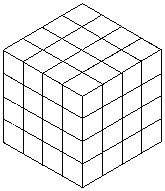
His "third gift" --

 © 2005 The Institute for Figuring
Monday, September 7, 2009
12:00 AM
Midnight in the Garden, continued:
Magic Boxes
"Somehow it seems to fill my head with ideas-- only I don't exactly know what they are!.... Let's have a look at the garden first!"
-- A passage from Lewis Carroll's
Through the Looking-Glass. The "garden" part-- but not the "ideas" part-- was quoted by Jacques Derrida in
Dissemination in
the epigraph to Chapter 7, "The Time before First."
Commentary
on the passage:
Part I: "
The Magic Box," shown on Turner Classic Movies earlier tonight
Part II: "
Mimsy Were the Borogoves," a
classic science fiction story:
"... he lifted a square, transparent crystal block, small enough to cup in his palm-- much too small to contain the maze of apparatus within it. In a moment Scott had solved that problem. The crystal was a sort of magnifying glass, vastly enlarging the things inside the block. Strange things they were, too. Miniature people, for example-- They moved. Like clockwork automatons, though much more smoothly. It was rather like watching a play."
Part III: A Crystal Block --
Sunday, September 6, 2009
11:07 AM
Meanwhile...
Sunday, September 6, 2009
11:00 AM
Today's Sermon:
Oscar Speech(continued from
February 25th, 2007)

"From wrong to wrong the exasperated spirit
Proceeds, unless restored by that refining fire
Where you must move in measure, like a dancer."
-- Four Quartets
Saturday, September 5, 2009
10:31 PM
Annals of Aesthetics:
Friday, September 4, 2009
2:02 PM
ART WARS:
Closing the Circle
Continued from Monday"This is a chapel
of mischance;
ill luck betide it, 'tis
the cursedest kirk
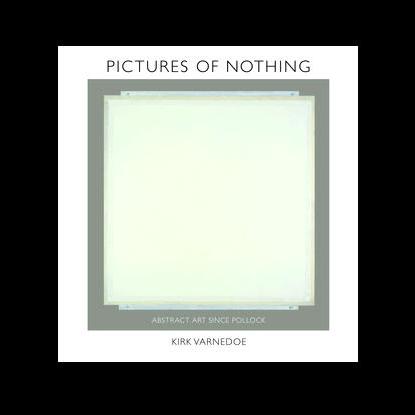
that ever I came in!"Philip Kennicott on
Kirk Varnedoe in
The Washington Post:
"Varnedoe's lectures were
ultimately about faith,
about his faith in
the power of abstraction,
and abstraction as a kind of
anti-religious faith in itself...."
Kennicott's remarks were
on Sunday, May 18, 2003.
They were subtitled
"Closing the Circle
on Abstract Art."
Also
on Sunday, May 18, 2003:
"Will the circle be unbroken?
As if some southern congregation
is praying we will come to understand."
Princeton University Press:
 See also
Parmiggiani's
Giordano Bruno --

Dürer's
Melencolia I --

and Log24 entries
of
May 19-22, 2009,
ending with
"Steiner System" --

George Steiner on chess
(see
yesterday morning):
"There are siren moments when quite normal creatures otherwise engaged, men such as Lenin and myself, feel like giving up everything-- marriage, mortgages, careers, the Russian Revolution-- in order to spend their days and nights moving little carved objects up and down a quadrate board."Steiner continues...
"Allegoric associations of death with chess are perennial...."
Yes, they are.
April is Math Awareness Month.
This year's theme is "mathematics and art."

Cf. both of yesterday's entries.
Thursday, September 3, 2009
2:02 PM
Painting the Mystical:
White Space"White space should not be considered merely 'blank' space-- it is an important element of design which enables the objects in it to exist at all." --
WikipediaRelated material (or non-material)--
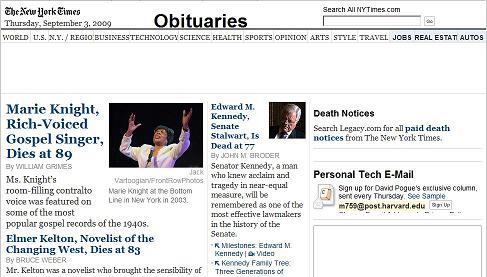
White space resulting from a recent lack of ad sales in the
New York Times obituaries section leads to the following composition--
White Space
with VoicesClick on images to enlarge.


Thursday, September 3, 2009
11:07 AM
Annals of Aesthetics:
Autistic Enchantment "Music and mathematics are among the pre-eminent wonders of the race. Levi-Strauss sees in the invention of melody 'a key to the supreme mystery' of man-- a clue, could we but follow it, to the singular structure and genius of the species. The power of mathematics to devise actions for reasons as subtle, witty, manifold as any offered by sensory experience and to move forward in an endless unfolding of self-creating life is one of the strange, deep marks man leaves on the world. Chess, on the other hand, is a game in which thirty-two bits of ivory, horn, wood, metal, or (in stalags) sawdust stuck together with shoe polish, are pushed around on sixty-four alternately coloured squares. To the addict, such a description is blasphemy. The origins of chess are shrouded in mists of controversy, but unquestionably this very ancient, trivial pastime has seemed to many exceptionally intelligent human beings of many races and centuries to constitute a reality, a focus for the emotions, as substantial as, often more substantial than, reality itself. Cards can come to mean the same absolute. But their magnetism is impure. A mania for whist or poker hooks into the obvious, universal magic of money. The financial element in chess, where it exists at all, has always been small or accidental.
To a true chess player, the pushing about of thirty-two counters on 8x8 squares is an end in itself, a whole world next to which that of a mere biological or political or social life seems messy, stale, and contingent. Even the patzer, the wretched amateur who charges out with his knight pawn when the opponent’s bishop decamps to R4, feels this daemonic spell. There are siren moments when quite normal creatures otherwise engaged, men such as Lenin and myself, feel like giving up everything-- marriage, mortgages, careers, the Russian Revolution-- in order to spend their days and nights moving little carved objects up and down a quadrate board. At the sight of a set, even the tawdriest of plastic pocket sets, one’s fingers arch and a coldness as in a light sleep steals over one’s spine. Not for gain, not for knowledge or reknown, but in some autistic enchantment, pure as one of Bach’s inverted canons or Euler’s formula for polyhedra."
-- George Steiner in "A Death of Kings," The New Yorker, issue dated September 7, 1968, page 133
"Examples are the stained-glass windows of knowledge." --
Nabokov

Click above images for some context.
Wednesday, September 2, 2009
9:48 PM
Thanks, Janet:
Outside the Box
Wednesday, September 2, 2009
6:00 PM
Chronicles of Boston:
Wednesday, September 2, 2009
11:09 AM
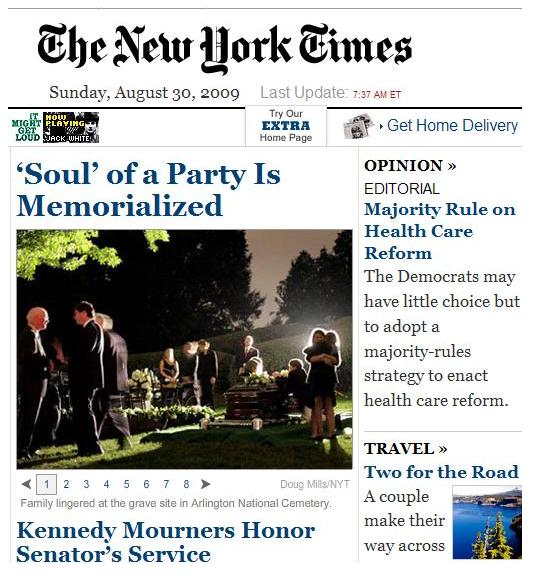
Soul of the Party, continued:
Back to SchoolCanto I: Canto II:
 Friday, August 28, 2009,
in this journal
Part I:
"Inside the church,
the grief was real...." |
Canto III: Sunday, August 30, 2009,
in The New York Times
"Things fall apart; the center cannot hold. Facebook, the online social grid, could not command loyalty forever."
-- Virginia Heffernan, "Facebook Exodus," NY Times Magazine, Sunday, August 30, 2009
|
Canto IV:

Click for details. Canto V: 
Tuesday, September 1, 2009
11:30 PM
Soul of the Party, continued:
Back to the Garden
The previous entry dealt with an artist who died last Wednesday (August 26).
Dominick Dunne, producer of the film version of "The Boys in the Band," also died last Wednesday.
In his memory, four readings:
1. "Pilot Fish," by Hemingway
2. Self-profile by Stephen Vider, author of "American Mystic" (see previous entry)
3. "Party Animal," Vider's essay on "The Boys in the Band" published on Sinatra's birthday, 2008
4. Back to the Garden of Forking Paths (also on Sinatra's birthday, 2008)